FROM PHD TO DISCOVERY: ROGER LI’S QUEST TO IMPROVE TREATMENT FOR LUNG FIBROSIS PATIENTS
After years of dedicated research into idiopathic pulmonary fibrosis (IPF), Roger Li has recently submitted his PhD thesis and transitioned into a Research Assistant role at the Institute for Respiratory Health. His work aims to understand why some IPF patients respond better to treatment than others, a question that could greatly improve outcomes for people living with this challenging disease.
IPF is a progressive lung condition characterised by scarring of the lung tissue, making it increasingly difficult to breathe. While antifibrotic drugs are the primary treatment, they do not work equally well for all patients and can cause side effects. Roger’s research investigates how these drugs affect circulatory biomarkers and genetic regulation in lung fibroblasts, the cells that produce the scar tissue characteristic of IPF.
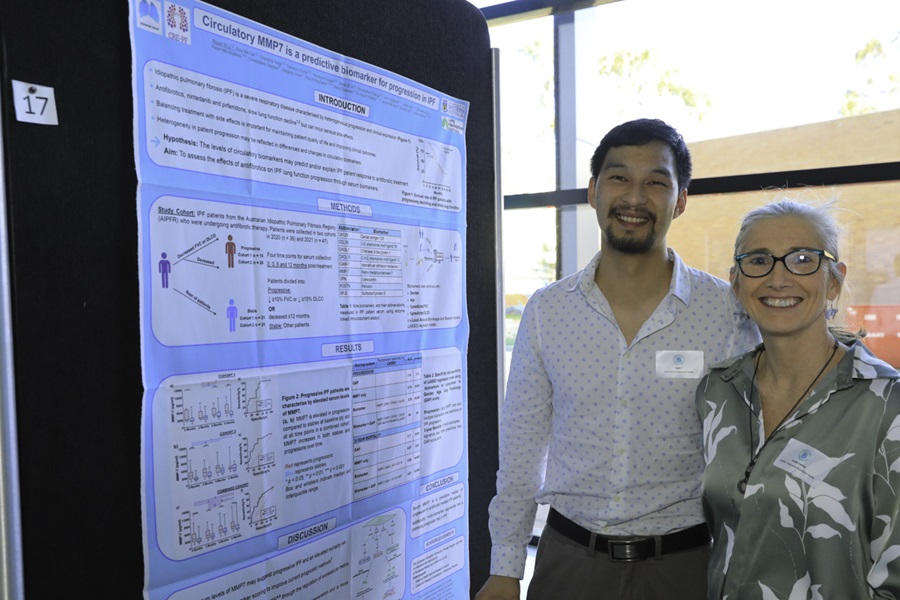
“I hope that by understanding the effects of antifibrotic drugs we can better optimise clinical management and identify areas where they are less effective, which may represent new treatment targets,” Roger explains.
His research has already yielded promising findings. Roger identified that high levels of MMP7, an enzyme that helps degrade tissue to facilitate scar tissue formation, in the blood indicate a more rapid decline in lung function in IPF patients taking antifibrotic drugs. This discovery could help clinicians predict which patients might need more aggressive intervention.
Perhaps more significantly, Roger found that multiple Wnt genes that control MMP7 production were not being affected by antifibrotic drugs in patient lung fibroblasts. This reveals a potential treatment gap and new therapeutic target that might enhance the effectiveness of existing medications.
“The findings cover a range of translational applications,” Roger notes. “Accurate circulatory biomarkers would help optimise current treatment regimens by allowing us to stratify patients by their risk of rapid decline or their potential responsiveness to drugs.”
What drew Roger to fibrosis research in the first place? “I find fibrosis interesting because it’s not inherently disease-causing and it’s not as simple as turning off a switch,” he says. “There are important beneficial processes involved, so thinking of solutions is always an interesting problem-solving exercise.” He adds that solutions for lung fibrosis could potentially apply to fibrotic diseases affecting other organs, making the research impact even broader.
The PhD journey was not without challenges. Roger admits that the constant analysis and critique inherent in academic research can create self-doubt. “Sometimes you just have to believe in the process and trust you can execute the skills you learned,” he reflects. Having a diverse support network, both at work and outside, proved invaluable during difficult periods.
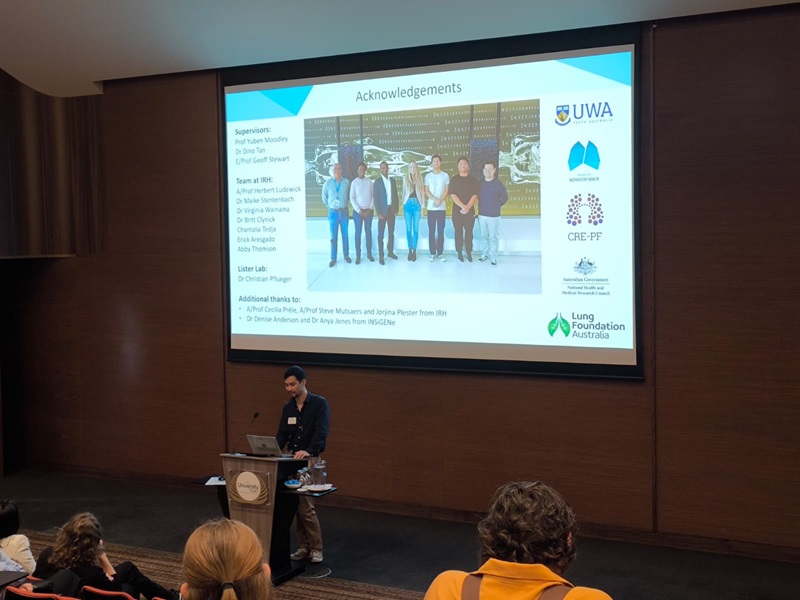
Now, as a Research Assistant at IRH, Roger is extending his PhD work by testing whether combining Wnt pathway inhibitors with antifibrotic drugs could improve treatment effectiveness compared to single-drug therapy. His long-term goal? To keep exploring the mysteries of lung fibroblasts and understand why IPF fibroblasts behave so variably between patients.
For students considering respiratory health research, Roger offers straightforward advice: “Be open-minded and don’t be afraid to express yourself. The next breakthrough or collaboration can come from anywhere. And enjoy it. Research can be fun, and there are few jobs quite like it.”
Outside the lab, Roger maintains balance through physical activities like cricket, squash, and gym workouts when feeling stressed, or pursues calmer interests like learning musical instruments, fishing, gaming, and reading. This variety, he says, helps him return to the lab refreshed and ready to tackle the next research challenge.
As Roger continues his postdoctoral research, his work holds genuine promise for improving our understanding, monitoring, and treatment of IPF, ultimately benefiting the patients whose lives depend on these advances.