Mesothelioma
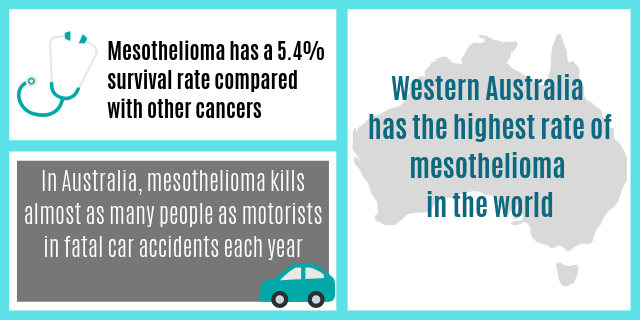
Mesothelioma can take between 20 to 40 years to develop after asbestos exposure. Australia has the highest incidence rates of mesothelioma per capita in the world, with between 700 and 800 people diagnosed each year.
One of our hopes is for new treatments to allow patients to manage their symptoms and to live longer and have a better quality of life. We work to:
- improve detection methods
- improve treatments
- increase understanding of the cellular changes that occur in asbestos disease
- increase understanding of the influence of human genetics
“We were part of the first team to show chemotherapy and immunotherapy together could actually work better rather than as opposing forces. Using the body’s own immune system to treat and hold in check the cancer is a fantastic strategy.”
Professor Anna Nowak, Director of NCARD
What we are doing now and where our research is taking us
We have a number of research groups investigating mesothelioma. The National Centre for Asbestos-related Diseases, Pleural Medicine Group, Tissue Repair Group, Occupational and Respiratory Health Group.
Our research into mesothelioma includes animal models, clinical trials, immunotherapy, pharmaceutical repurposing, biomarkers and use of radiation treatment.
Research into mesothelioma across these groups goes from the pragmatic – cutting down the number of days spent in hospital for patients with the use of pleural catheters – to the application of cutting-edge technologies such as signalling pathways, genomics and computational modelling.
- IRH researchers recognised at 2025 Raine Medical Research Foundation Awards
- WA leads the way as Australia’s only site in $10.08M global asthma study
- WA Joins TRACKER, Strengthening Australia’s National Lung Cancer Research Network
- Midland lung cancer patients forced to pay or travel for vital treatment
- FROM PHD TO DISCOVERY: ROGER LI'S QUEST TO IMPROVE TREATMENT FOR LUNG FIBROSIS PATIENTS
- Nedlands nurse leader Sue Morey named 7NEWS Health Hero for lifetime of service
Help us continue our vital research by making a donation towards mesothelioma research.